

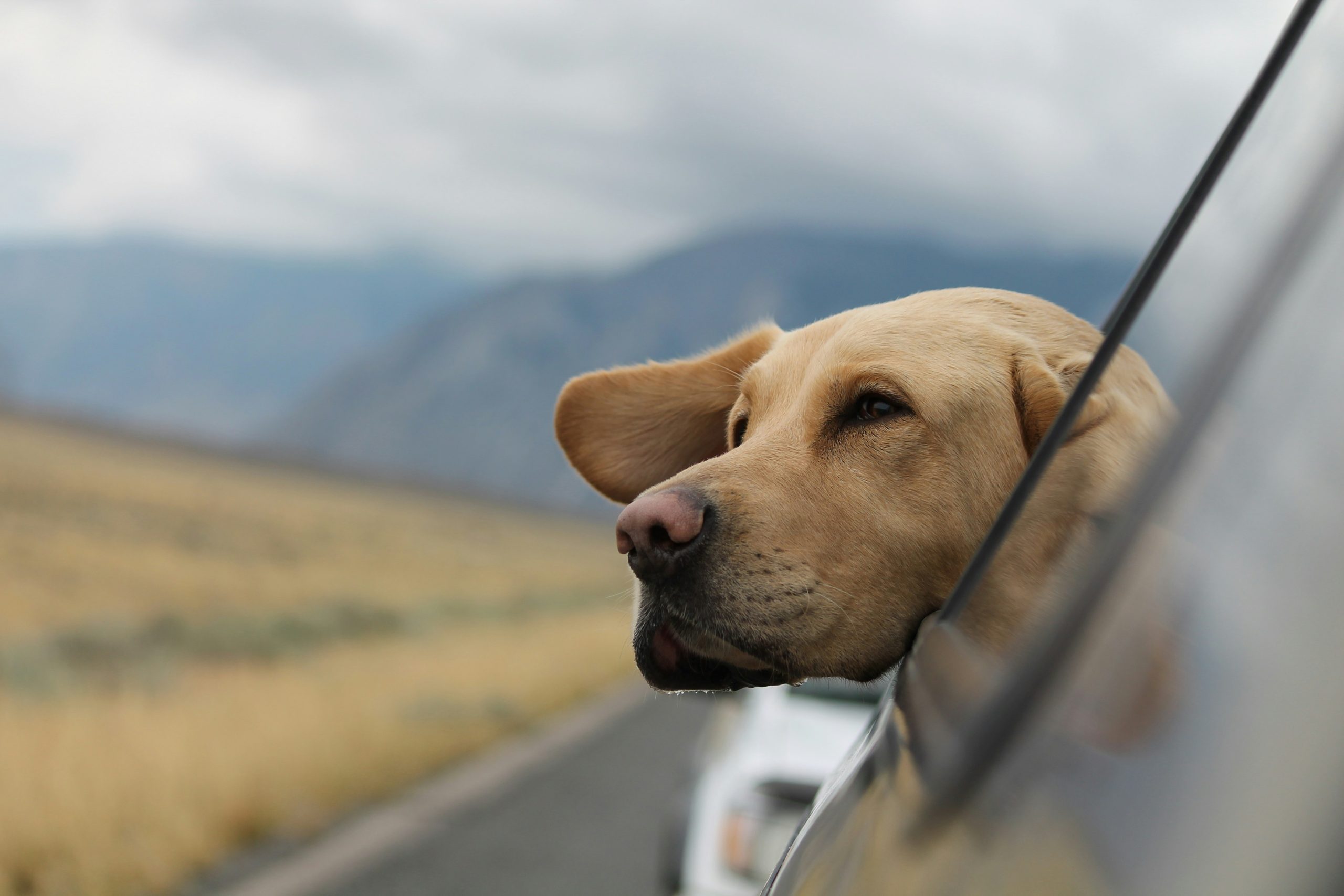
Pet transport from the UK to Europe by road takes anything from around six hours to two full days, depending on the destination. A dog or cat travelling from London to Paris is usually door to door in about six hours. Amsterdam is around seven hours from London, while journeys to southern Germany, Italy, Spain or Portugal normally run over two days with an overnight stop.
The drive is only part of the timeline, though. Before any pet can travel from Great Britain to the EU it needs a microchip, a rabies vaccination followed by a 21 day wait, and an animal health certificate issued within 10 days of entering the EU. For a pet that has never travelled, that preparation takes at least three weeks and usually longer, so it is worth planning around both clocks from the start.
The journey itself
Every road journey from the UK to mainland Europe starts with the Channel crossing. Most of our journeys use LeShuttle from Folkestone, where the crossing to Calais takes 35 minutes and pets stay in the vehicle throughout. LeShuttle asks owners to check pets in at least one hour and no more than two hours before departure, and the Pet Reception Centre is open 24 hours a day at both terminals.
Ferries are the alternative. P&O’s Dover to Calais crossing takes around 90 minutes, and DFDS quotes about 1 hour 40 minutes. On most ferries pets stay in the vehicle, which means they are left alone below deck for the sailing.
In our experience, LeShuttle works better than the ferry for pet transport because the animal stays with the driver for the whole crossing, the crossing is less than half the length, and there is no period of separation on a car deck. For a nervous dog or cat, that difference matters more than the few pounds saved on a ferry ticket.
Typical journey times from the UK
The table below gives approximate driving times from Calais without traffic or breaks, based on standard route planners. Add the time from your home to Folkestone, an hour for check in, the 35 minute crossing, and regular welfare stops.
| Destination from Calais | Approx. distance | Approx. driving time |
|---|---|---|
| Brussels | 195 km | 2 hours |
| Paris | 290 km | 3 hours |
| Amsterdam | 360 km | 4 hours |
| Cologne | 400 km | 4 hours |
| Frankfurt | 580 km | 6 hours |
| Berlin | 925 km | 8 to 9 hours |
| Munich | 900 km | 9 hours |
| Milan | 990 km | 11 hours |
| Vienna | 1,280 km | 12 hours |
| Barcelona | 1,275 km | 13 hours |
| Madrid | 1,495 km | 15 hours |
| Rome | 1,555 km | 16 hours |
| Lisbon | 1,965 km | 19 to 20 hours |
Those are driving figures only. Door to door, the times we quote clients look quite different. London to Paris is around six hours, Amsterdam to London around seven, and Amsterdam to Manchester around eleven. Anything much beyond a day’s driving, such as Munich, Vienna, Barcelona or Rome, is planned over two days with an overnight stop.
Why welfare stops add time
On longer routes we stop around every two hours. Each stop is a chance to offer water, give dogs a short walk on a lead, offer cats a litter tray and check that every animal is comfortable.
The legal minimum is less frequent than that. The EU and retained UK rules on animal welfare in transport require dogs and cats moved commercially to be given water at least every eight hours and fed at least every 24 hours. We’ve found that stopping well within those limits makes for calmer animals at the other end, especially on journeys of ten hours or more.
From working with clients over more than 10 years, the routes that run late are rarely the long ones. They are the ones where a dog was not used to a crate, or where a stop had to be extended because an animal was distressed. A few short crate sessions at home in the weeks before travel will usually save more time than any route choice.
How long the paperwork takes
The preparation timeline is fixed by law and cannot be rushed.
- Microchip. This must be done before, or at the same time as, the rabies vaccination. If it is done afterwards, the vaccination has to be repeated.
- Rabies vaccination. Your pet must be at least 12 weeks old. After the first vaccination you must wait 21 full days before travelling, with day one being the day after the injection. In practice that means a puppy or kitten cannot travel into the EU before around 15 weeks old.
- Animal health certificate. This has to be issued by an Official Veterinarian within 10 days of entering the EU. Since 22 April 2026, the same certificate then covers onward travel within the EU and return to Great Britain for up to six months, as long as the rabies vaccination remains valid.
- Tapeworm treatment for dogs. Dogs going to Ireland, Finland, Malta, Norway or Northern Ireland, and dogs coming into Great Britain from most of Europe, need tapeworm treatment from a vet between 24 and 120 hours before arrival.
If your pet’s rabies vaccination is already in date, the lead time can be as short as the AHC appointment itself. If you are starting from scratch, allow at least four to six weeks.
Pets coming to Great Britain from some countries outside the EU also need a rabies blood test, taken at least 30 days after vaccination, followed by a three month wait. That applies to some of our clients moving from further afield, and it is the single biggest cause of long delays.
If you are not travelling with your pet
Many of our clients fly to their new home while their pet travels by road. That is allowed, but the timing matters. Under EU rules, a pet can travel with someone the owner has authorised in writing, as long as the owner travels within five days before or after the pet. Outside that window, the move is treated as a commercial movement and different, stricter rules apply.
We’ve found that most clients find the five day rule easy to work with once they know about it. It simply means booking your flight and your pet’s road journey for the same week.
How far ahead should you book pet transport to Europe?
For most routes, booking three to four weeks ahead gives enough time to confirm the crossing, line up the AHC appointment and plan the overnight stop if one is needed. In summer and around Christmas, when LeShuttle demand peaks, more notice helps.
When you book with us, a 50% deposit secures the LeShuttle ticket and the balance is due two days before travel. With the crossing confirmed, we can tell you exactly which days your AHC appointment needs to fall on, and whether your dog needs tapeworm treatment for the return leg.
Will the timeline change soon?
Possibly. The UK and EU are negotiating a sanitary and phytosanitary agreement, and the government has said it aims to bring back pet passports for pets from Great Britain as part of it. In September 2026 the Food Standards Agency said it was preparing for the agreement to take effect in summer 2027, but no date has been confirmed for pet travel. Until any change is in force, every trip from Great Britain to the EU needs a new animal health certificate.
Conclusion
The drive from the UK to Europe takes around six hours to Paris, seven to Amsterdam and up to two days to Spain, Italy or Portugal, once you include the crossing and regular welfare stops. The preparation takes longer, at least three weeks for a first rabies vaccination, plus a tightly timed vet appointment for the animal health certificate.
If you are planning a move, Europe To UK Pet Taxi can give you a door to door timeline for your exact route, including when to book each vet appointment. Contact us with your pickup address, destination and pets, and we will put the plan together for you.